Renting In Sydney
How To Pass A Routine Rental Inspection In Sydney
Routine inspections are not exit inspections, but a bad report follows you to lease renewal. Here is what Sydney agents actually check, how much notice they must give, and a realistic plan for the week before.
In This Guide
What The Rules Actually Say
What Agents Are Really Looking For
Sydney Specific Problems To Get Ahead Of
A Realistic Plan For Inspection Week
The Checklist For The Areas That Matter
Should You Book A Cleaner?
What Happens After The Inspection
The Short Version
Routine inspections make Sydney tenants more anxious than they need to be, and less prepared than they should be. Nobody is grading your housekeeping. The agent is recording the condition of the property, and that record follows you to lease renewal and, eventually, to your bond.
This guide covers what Sydney agents actually check during a periodic inspection, what the notice rules are, and a realistic plan for the week beforehand.
7 days
Minimum written notice
4 per year
Maximum routine inspections
$66/hr
Hourly cleaning if you are short on time
What The Rules Actually Say
Under NSW residential tenancy rules, a landlord or agent generally must give at least 7 days written notice before a routine inspection, and there is a limit of 4 routine inspections in any 12 month period.
Different rules apply to other reasons for entry, such as urgent repairs, general repairs, valuations or showing the property to prospective tenants, and each has its own notice period. If a notice does not look right, NSW Fair Trading is the source of truth rather than the agency's own template.
You do not have to be there
With proper notice the agent can inspect whether or not you are home, and most tenants are at work. Being present is worth it only if you want to raise maintenance issues face to face, which is often the fastest way to get something actioned.
What Agents Are Really Looking For
A routine inspection is not a cleanliness audit. It is a condition and risk check on someone's asset. Understanding that changes what you prioritise.
What goes in the report
- Mould in bathrooms, on ceilings or behind furniture
- Water stains under sinks, around windows and on ceilings
- Damage beyond fair wear and tear, such as holes or broken fittings
- Signs of pests, including droppings and ant trails
- Unapproved alterations, wall hooks and paint changes
- Whether the garden and outdoor areas are being maintained
What agents are not there for
- Dishes in the sink or an unmade bed
- Your furniture, decor or how tidy your wardrobe is
- Normal clutter on a weekday
- Minor scuffs consistent with ordinary living
- Pre-existing issues already on the condition report
The practical takeaway is that a spotless benchtop with mould creeping along the shower silicone is a worse report than a slightly messy kitchen in a well-maintained property.
Sydney Specific Problems To Get Ahead Of
Three issues appear in Sydney inspection reports far more than anywhere else, and all three get worse if you ignore them between visits.
Bathroom mould and humidity
Sydney summers are humid, and a lot of apartments have internal bathrooms with a single exhaust fan. Mould appears along silicone lines, on grout and on the ceiling above the shower. Run the fan for twenty minutes after every shower, keep the door open afterwards, and treat spots the week they appear rather than the week of the inspection.
Salt and sand in coastal rentals
Condensation on single glazed windows
Older Sydney flats and Federation homes sweat on cold mornings, and the water sits on timber sills until it stains or swells the paint. Wipe sills through winter and report any swelling early, because untreated it becomes damage rather than condensation.
Get A Fixed-Price End Of Lease Quote In 60 Seconds
Avoid re-clean risk and bond deductions. Book a detailed clean built for final inspection standards in Melbourne and Sydney.
No-obligation quote. Quick response from our team.
A Realistic Plan For Inspection Week
Seven days notice is enough time if you spread the work out. This is the order that removes the most risk for the least effort.
Day one, walk the property with fresh eyes
Take your phone and photograph anything that needs repair rather than cleaning. Leaking taps, a failing exhaust fan, a sticking window, mould that returns no matter what you do.
Day two, report the maintenance items in writing
Email the agent before the inspection, not after. A reported issue is a maintenance record. The same issue found at inspection and never reported looks like neglect, and neglect is what costs bond later.
Days three to five, deal with the high risk areas
Bathrooms first, particularly silicone, grout and the exhaust fan cover. Then the kitchen, including the rangehood filter and under the sink. Then window sills, tracks and any sign of damp behind furniture.
Day six, general clean through the property
Floors, surfaces, skirting boards, light switches and mirrors. This is the part most tenants start with and it should be near the end.
Day seven, outdoor areas and a final pass
Balcony, courtyard, entry, bins and the garden if it is on your lease. Then a short walkthrough with the agent's eyes rather than your own.
Photograph the property after you finish
Timestamped photos after an inspection clean are the cheapest insurance a tenant has. They establish the condition at that date, which matters if something is raised months later or at the end of the lease. It is the same habit that protects your bond at move-out.
The Checklist For The Areas That Matter
If time is short, this is what to cover first.
High-risk areas for a Sydney inspection
- Shower silicone, grout lines and glass
- Exhaust fans and vents in bathrooms and laundry
- Under the kitchen sink, including the cupboard floor
- Rangehood filter and the wall behind the cooktop
- Window sills, tracks and any timber showing damp
- Behind and under furniture against external walls
- Balcony drain, courtyard and entryway
- Smoke alarms, so you can report a flat battery
Everything else is presentation. It helps, but it is not what changes a report.
Should You Book A Cleaner?
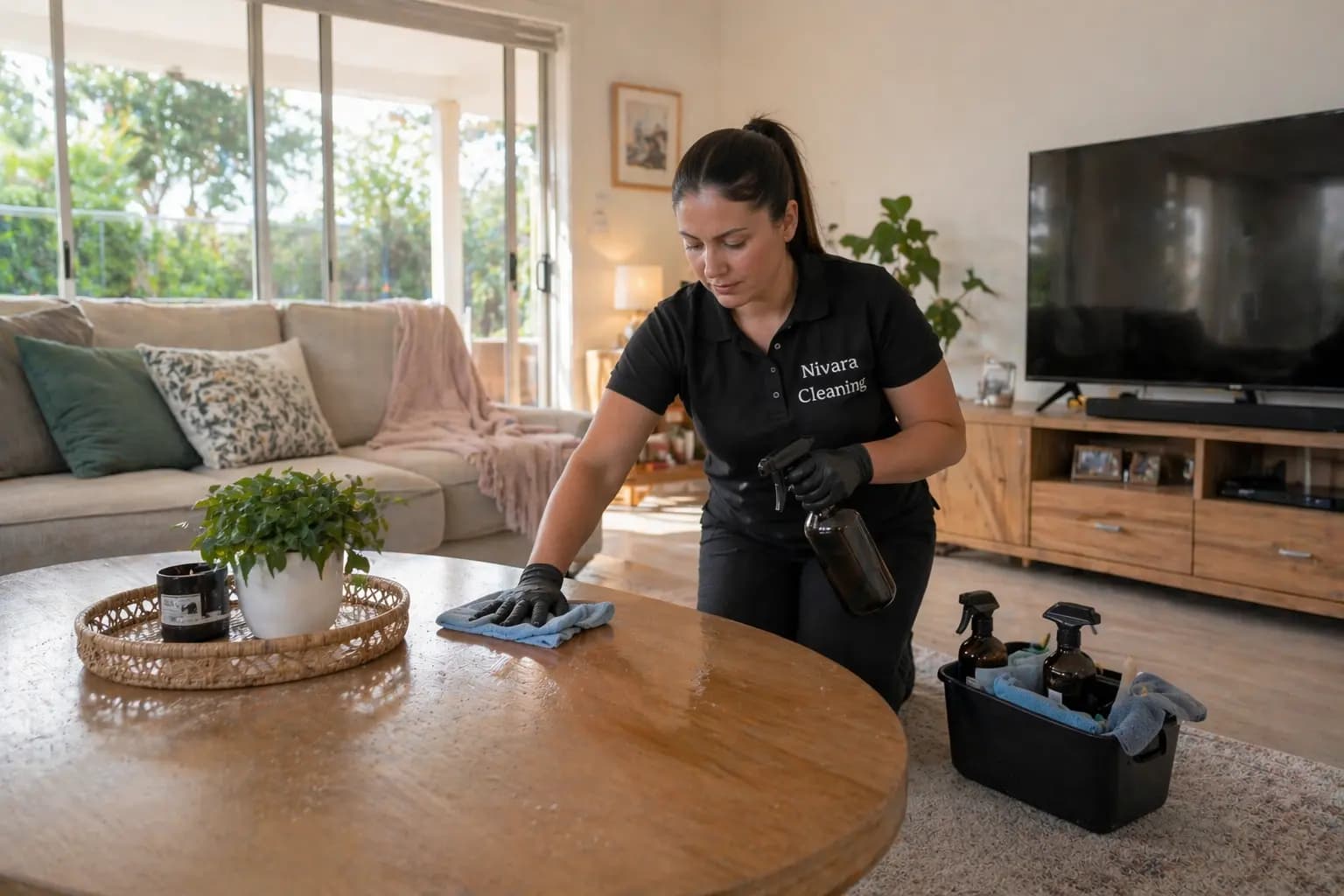
For most tenants, an inspection is manageable in a weekend. Booking help makes sense in three situations: you are time poor, the property has a recurring problem such as bathroom mould, or several inspections have already produced comments you want to reverse.
General clean, 1 bed
$150
One-off or recurring
General clean, 3 bed
$210
One-off or recurring
Deep clean, 3 bed
$290
For problem areas
Hourly cleaning is $66 per hour if you only want specific areas covered, such as bathrooms and the kitchen before an inspection. Recurring bookings are discounted 20% weekly, 15% fortnightly and 10% monthly, which for many Sydney households costs less per month than one deep clean and removes inspection stress entirely. Full details are on the hourly cleaning Sydney page and pricing.
Inspection next week and no time to prepare?
Tell us your property size and which areas need attention. We will quote a fixed price for a one-off clean, or an hourly block for the high-risk rooms.
Get My Free QuoteWhat Happens After The Inspection
Most of the time, nothing. A report is filed and you hear nothing further.
If something does need action, you usually receive a written notice describing the issue and a timeframe, sometimes followed by a re-inspection. Handle it in writing, keep a copy of what you did and when, and treat it as a record rather than a dispute.
Where it genuinely matters is at the end of the lease. A property that has been maintained across two years is far easier to hand back than one where two years of mould, grime and small damage arrive at the final inspection at once. That is the connection most tenants miss: routine inspections are how bond outcomes are decided, slowly, long before anyone books an end of lease clean.
Moving Out Soon? Lock Your Cleaning Slot Before Dates Fill
Our team handles the high-fail areas agents check first, so you can hand over keys with confidence.
Popular move-out dates fill quickly each week.
The Short Version
Give the report what it is looking for. Deal with mould, damp and damage first, report maintenance in writing before the agent finds it, and clean the presentation layer last.
Do that four times a year and the exit inspection stops being an event. If you want the move-out side of this, our Sydney end of lease cleaning cost guide covers pricing, and the full end of lease checklist lists every item agents inspect at handover.
Frequently Asked
Questions Tenants Ask Us
How much notice does a Sydney agent have to give for a routine inspection?
Under NSW residential tenancy rules a landlord or agent generally must give at least 7 days written notice for a routine inspection, and inspections are limited to a maximum of 4 in any 12 month period. Notice periods differ for repairs, valuations and showing the property to prospective tenants. Check current requirements with NSW Fair Trading if you are unsure about a specific notice.
Do I have to be home for the inspection?
No. The agent can enter with proper notice whether or not you are there, and most tenants are at work. If you want to be present, ask for a time window rather than assuming one. Being present is useful if you want to raise maintenance issues in person.
What do agents actually look for in a routine inspection?
Two things: whether the property is being looked after, and whether anything needs repair. They check for mould, water damage, pest signs, damage beyond fair wear and tear, unapproved alterations and general upkeep. Ordinary mess is not a breach. Mould growing in a shower recess or a water stain under a sink is what they are actually recording.
Can I fail a routine inspection?
There is no pass or fail grade. The agent files a report, and if something breaches the lease you may get a written request to fix it, followed by a re-inspection. The practical risk is a pattern of poor reports at lease renewal or rent review time, plus problems that quietly grow into bond deductions at the end.
How much does a professional clean before an inspection cost in Sydney?
A one-off general clean starts at $150 for a one bedroom and $210 for a three bedroom, and a deep clean starts at $200 and $290 for those sizes. Hourly cleaning is $66 per hour if you only want specific areas covered. Recurring bookings are discounted 20% weekly, 15% fortnightly and 10% monthly.